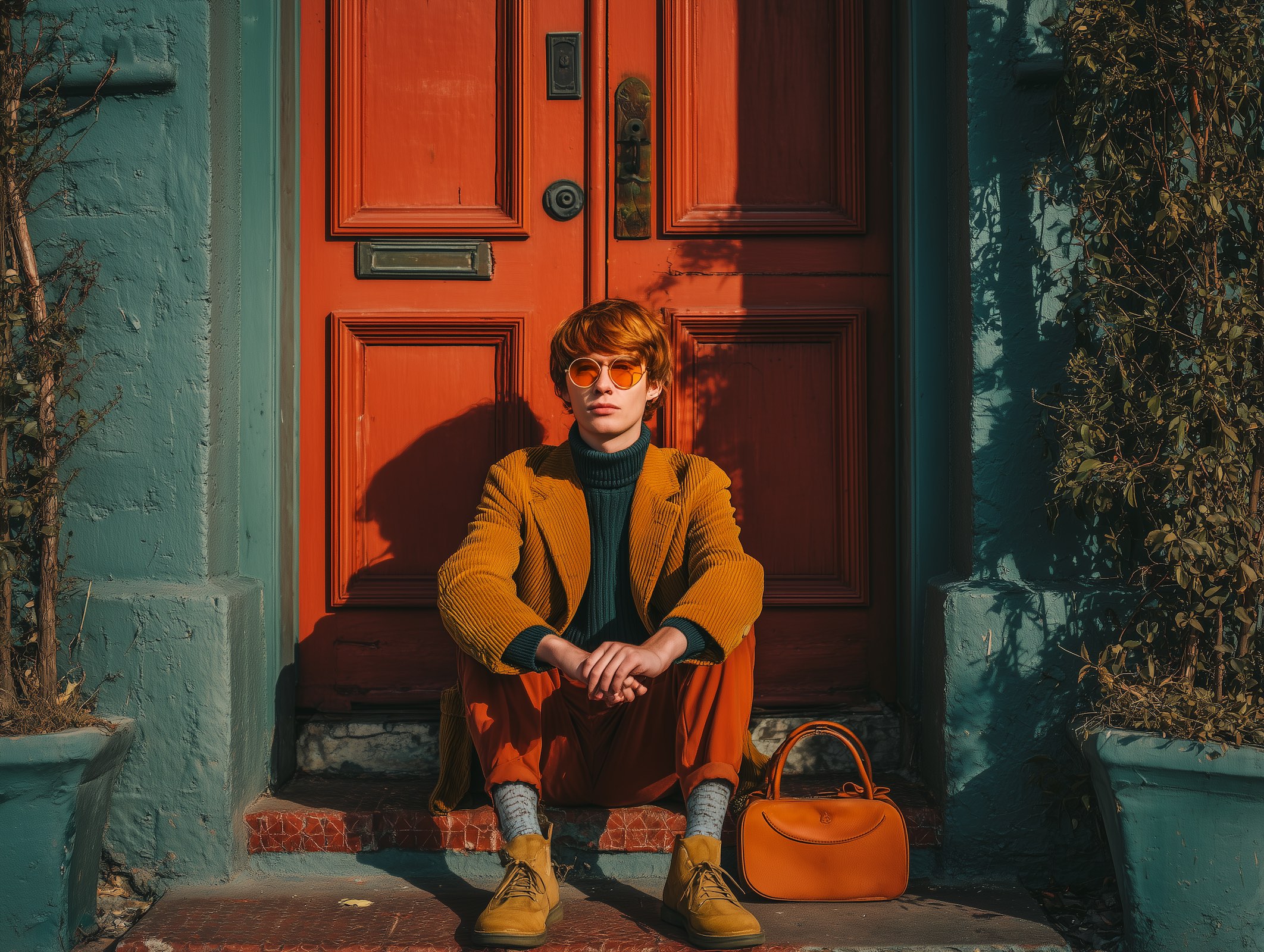
Design Lessons I Learned Through Photography
One of the biggest lessons photography taught me is the importance of composition as storytelling. In design, composition directs the viewer’s eye. In photography, it tells the emotional truth of the moment. A slight shift in framing can completely change the narrative. Over time, I learned to think like a designer while shooting: aligning elements, using negative space intentionally, and creating visual tension when the story needed it.
Photography also taught me patience. In design, revisions can feel endless because everything is editable. In photography, especially when working with natural light, timing is everything. You can’t change the sun’s position. You can’t move a cloud. You wait, you observe, and you react. This patience made me more thoughtful as a designer too.
Colour theory is another area where both disciplines overlap. Light changes colour constantly. A neutral wall can shift from warm gold to cool grey in a matter of minutes. As a photographer, learning to read and control colour made me better at creating palettes in my design work. I became more sensitive to subtle shifts, more intentional about contrasts, more aware of emotional tone.
Perhaps the most valuable lesson is simplicity. In photography, removing unnecessary elements makes the subject shine. In design, removing visual noise strengthens the message. Whether I’m creating a poster or shooting a portrait, I ask myself: What can I remove to make this clearer?
Photography and design are not two different worlds—they’re two languages describing the same ideas. And the more fluent you become in each, the stronger your creative voice becomes overall.